The design
Why we redrew the deck from scratch.
Skat has been played for more than 200 years with traditional decks — Jacks, Queens, Kings. The trouble is, a classic deck was never designed for Skat's rules. The four Jacks are always trump, don't belong to their printed suit, and rank in an order nothing about the card tells you. So we designed a deck that fits the actual rules of the game, instead of asking the rules to work around a deck built for something else.
This page covers the highlights. For the full reasoning — including the ideas we tried and threw out — read the Detailed Design write-up.
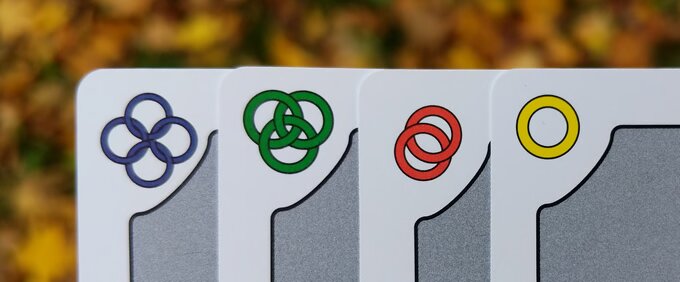
The Ring Cards: highest trumps, set apart
In Skat, the four "Jacks" are always the highest-ranking trumps — except in Null games, where there's no trump at all — and they aren't part of their printed suit. That's the single biggest source of confusion for new players: "you need to play Hearts, but not the Jack of Hearts, because it's not really Hearts."
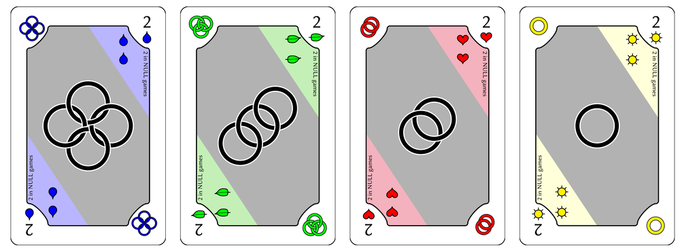
We pulled the Jacks out of the suit grid entirely and gave them their own identity: the Blue Rings, the Green Rings, the Red Rings, and the Yellow Ring. Their relative order is built into their names too — Blue outranks Green, which outranks Red, which outranks Yellow — so you never have to memorize a separate ranking table.
The ranks: points and order, right on the card
Each numbered card is named after its own point value — 11, 10, 4, 3 — and during suit-trump and Ring games, higher numbers simply outrank lower ones. Compare that to a standard deck, where a Ten is worth 10, an Ace is worth 11, a King is worth 4, a Queen is worth 3, and 7/8/9 are worth nothing — a set of point values you just have to remember.
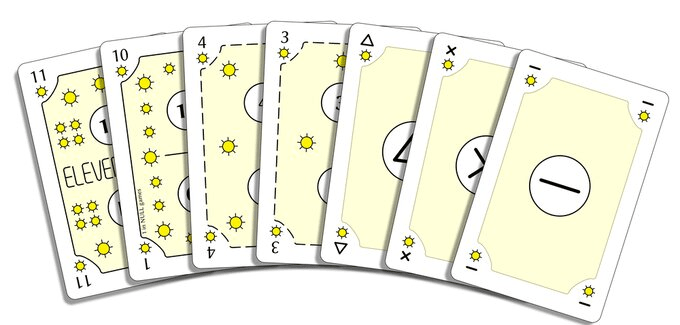
The zero-point "shape" cards — Dash, Cross, Triangle — even rank by how many strokes it takes to draw their symbol. And each Ring card has its point value, 2, printed right on it.
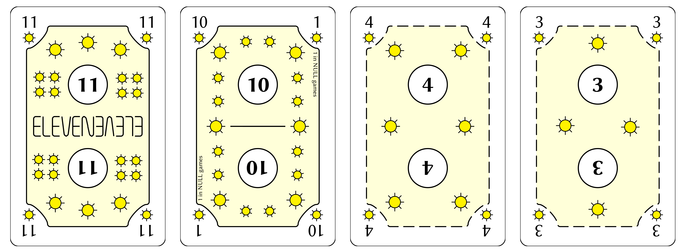
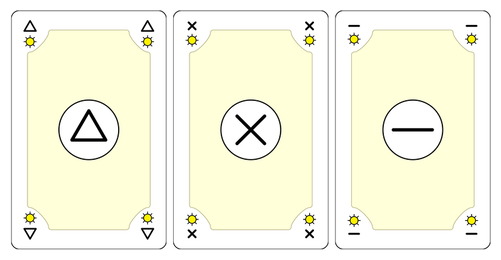
“A large reason people struggle learning this is card rank and point value is different than most games — this abstract deck solves that problem. A trainer, if you will.”
The part we're proudest of
One card. Two rankings. No extra rules.
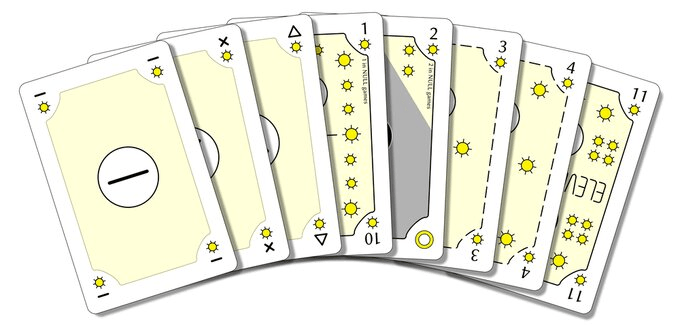
Null games throw out everything — no trump, and the goal flips to losing every trick — which normally means learning a second, unrelated ranking from scratch. Instead, we printed it on the same card, in the corner that only shows when you fan your hand the other way.
Fan your cards one direction and you see the Ring games ranking. Fan them the other way, and the same cards show their Null ranking — the Ring card's color corner shows through, reminding you it now counts as its color instead of trump, the 10 becomes a 1, and the order stays exactly as consistent as the numbers printed on the cards: Dash, Cross, Triangle, 1, 2, 3, 4, 11. No second deck, no lookup card, no memorizing — just which way you happen to be holding your hand.
The suits: colorful, simple, fresh
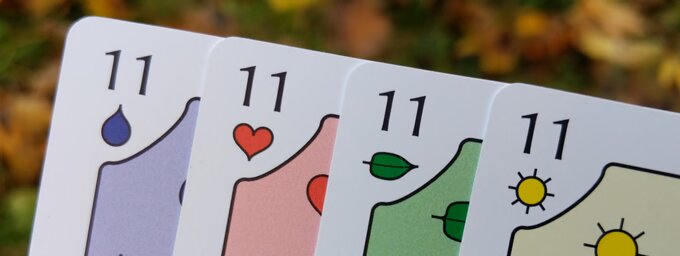
We chose four clearly distinct colors for the suits: Blue, Green, Red, and Yellow. Red and Green nod to the German-suited decks still widely used across parts of Germany; Yellow and Blue round out a fresh, modern palette.
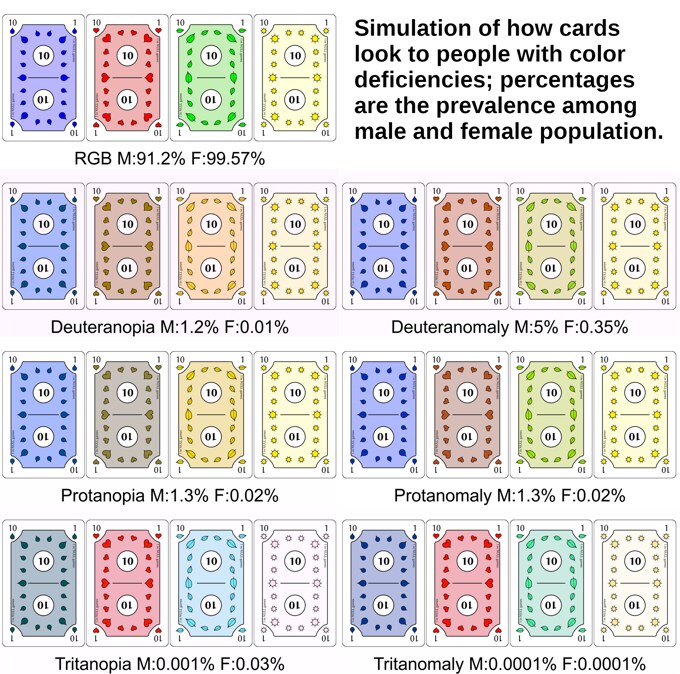
The specific shades weren't picked by eye alone — they're tuned to stay distinguishable for the roughly 5% of people with some form of color deficiency. More on exactly how below.
Accessibility: tested, not assumed
We designed the suits for everyone, including the roughly 5% of people who have difficulty distinguishing certain colors, like various red and green shades. Each suit got a large, recognizable icon on top of its color, so shape never depends on color perception alone.
We also solicited feedback directly from people with color deficiencies and simulated how the cards would look under deuteranopia, protanopia, and tritanopia — the main forms of red-green and blue-yellow color blindness — tuning hue, saturation, and brightness until every suit stayed distinguishable in every simulation, not just in normal color vision.
Built for the table, not just the box
The deck comes with four summary cards you can keep on the table as a cheat sheet while you're still learning — and small QR codes printed on the cards link straight to the relevant moment in our explainer videos on Learn to Play.
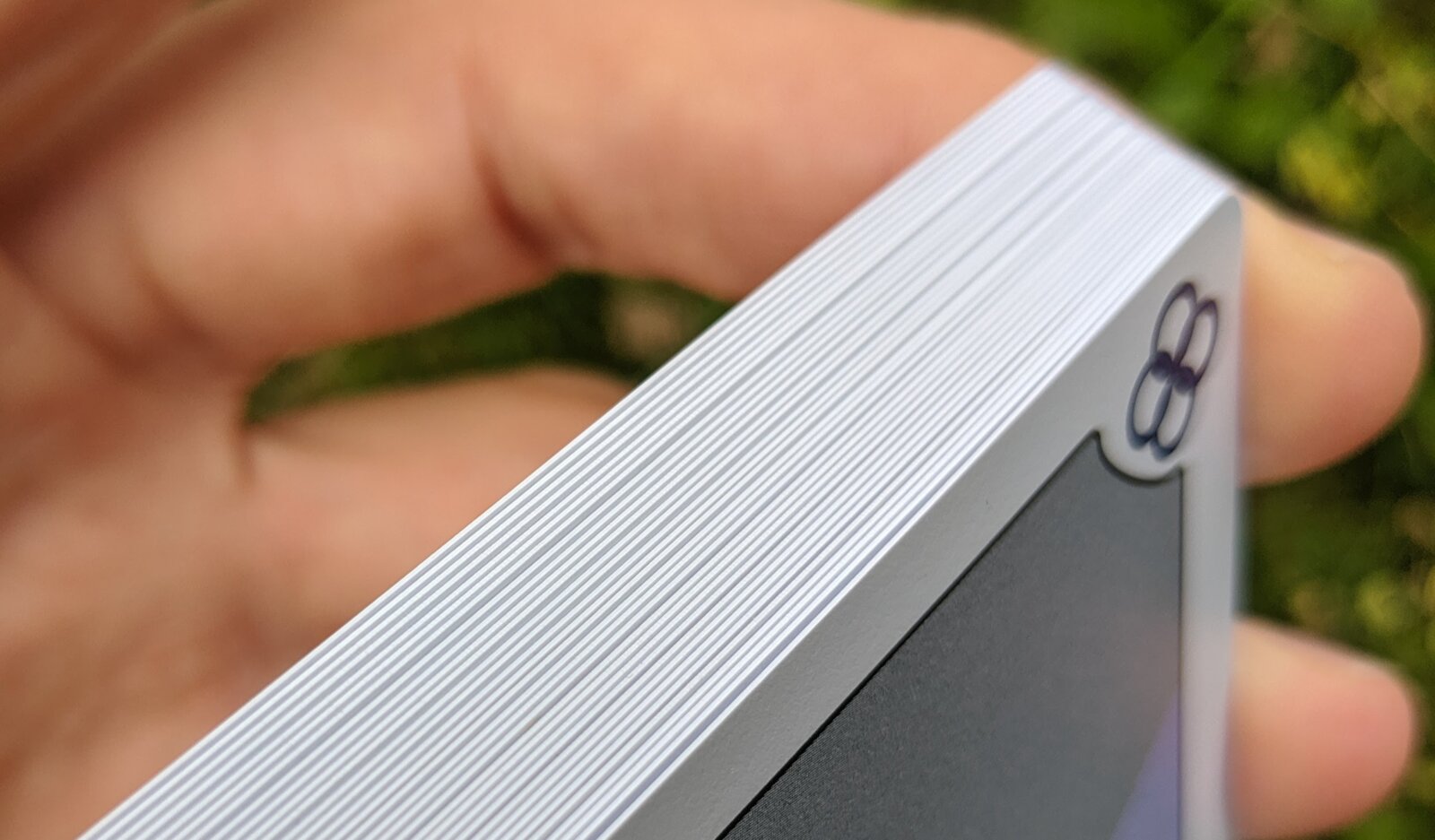
Every deck is 100% PVC at traditional Skat size (59mm × 91mm), 32 cards plus 4 summary cards. PVC cards don't get soft corners from shuffling and can be wiped clean — this is the last Skat deck you'll need to buy.
How we made it
Getting the design right took many prototypes, play-tested with friends and coworkers round after round until the details actually worked at the table — not just on paper. From there, we requested samples from a range of manufacturers and picked our two favorites based on card size, reputation, and print quality.
The deck was designed in Madison, Wisconsin, and first funded through Kickstarter in October 2020, where it hit its goal in about 7 hours.
Want the full reasoning, including the ideas that got thrown out along the way? Read the complete design write-up.